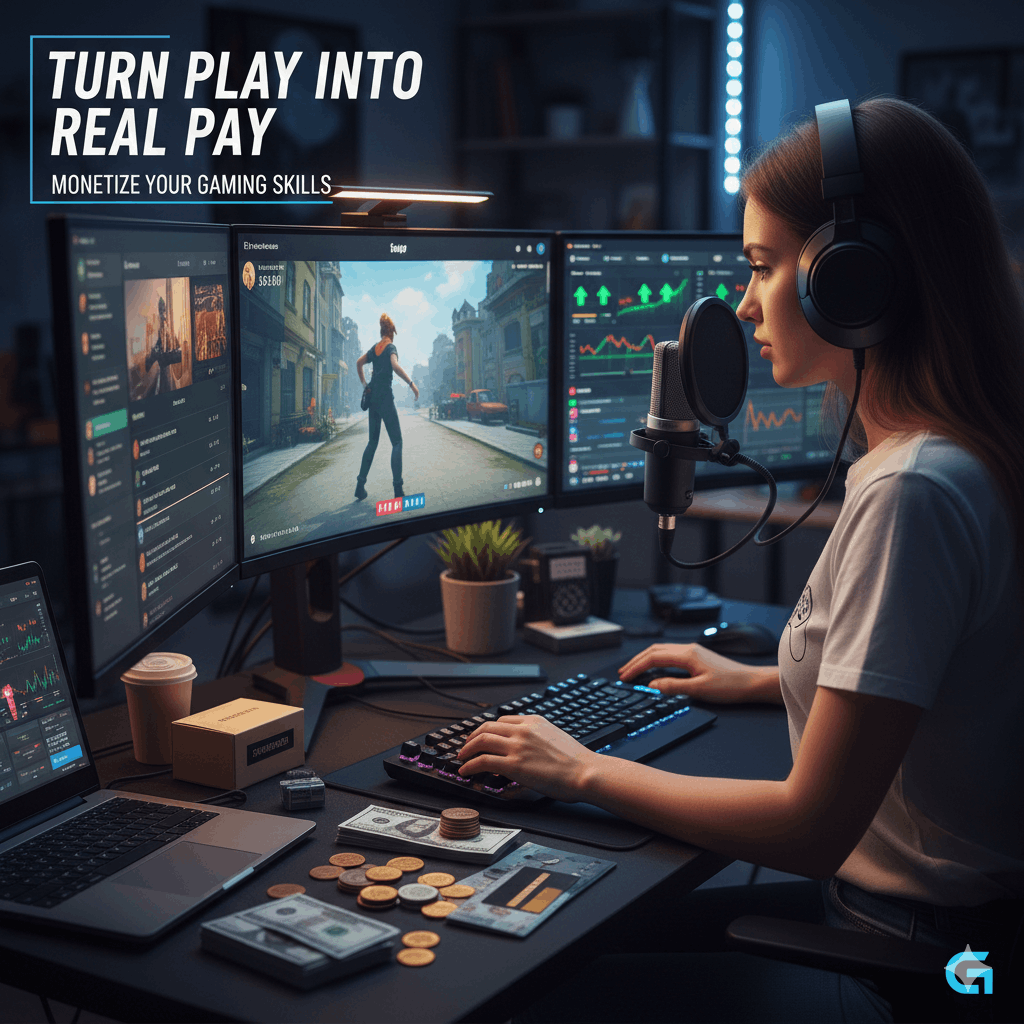

Making money from gaming is real, How To Make Money From Gaming Turning Play Into Real Pay, but it rarely looks like a single magic platform that pays you overnight. Most people who earn real money from gaming do it through a mix of skills, consistency, and a clear plan. Some get paid to play games on stream. Some turn gaming into income by creating videos, writing guides, or running a gaming website. Others compete for esports prize money earnings, coach newer players, test games for studios, or build a small business around a niche gaming community.
This guide is built around legit ways to earn from gaming. It avoids hype and focuses on routes that can produce real pay gaming opportunities when you treat them like work, track what’s working, and protect yourself from scams. It also helps you choose what fits your personality, time, and budget.

You do not need to be world-class at a game to start earning. You do need to be realistic about effort, learning, and how long it takes to gain traction. If you want full time income from gaming, you’ll almost always need multiple income streams gaming, not a single bet.
The Truth About Getting Paid to Play Games
A lot of people type “make money playing video games” expecting a simple app that pays cash for hours of fun. That version exists in tiny amounts, usually as reward-style offers with low payouts. Real income comes from one of two things:
First, you create value for an audience. That can be entertainment, education, community, or a useful resource.
Second, you create value for a company. That can be testing, feedback, content, marketing, development help, or sales.
When you understand that, the whole topic becomes clearer. You’re not “paid to play.” You’re paid because your gaming activity produces something other people want.
This matters because it shapes your choices. how to make money from gaming turning play into real pay if you want online gaming income methods that scale, pick routes where your output has a long shelf life, or where it compounds over time.
Pick Your Lane: The Four Main Income Styles
Before talking tools or platforms, decide how you want to earn. Most routes fall into four styles:
Audience-driven income
This includes game streaming for money, YouTube gaming monetization, Patreon for gamers, donations and tips on streams, brand deals for gamers, and affiliate programs for gamers. Your income grows as your audience grows.
Performance-driven income
This includes competitive gaming for cash, online tournaments with cash prizes, esports prize money earnings, and professional gamer income streams. Your income depends on results, ranking, and visibility in competitive scenes.
Service-driven income
This includes sell gaming coaching services, freelance work for gamers (editing, thumbnails, voice), beta testing games for money, QA game testing freelance, and writing for gaming sites. You earn per project or per client.
Asset-driven income
This includes gaming blog monetization, gaming website ad revenue, sell game guides and ebooks, create gaming courses online, sell game mods online, unity asset store earnings, and unreal engine marketplace sales. You build something once and sell it repeatedly.
A beginner guide to earning from gaming should show that you can start with one lane, then add a second later. Many people begin with services because it pays sooner, how to make money from gaming turning play into real pay then build an audience or a digital product once they have momentum.
Beginner Don’t-Overthink Plan: Start Earning Through Games Without Burning Out
If you feel stuck, use a simple approach:
Choose one route that pays sooner and one route that grows over time.
The sooner route could be coaching, editing, or writing. The long-term route could be streaming, YouTube, or a gaming blog. This pairing reduces pressure, because you’re not waiting months for your first payout.
Keep your scope small at first. A tight niche is easier to build than a “variety gamer” approach. A specific game, genre, or challenge style helps people remember you.
When people search “how gamers make money online,” they often ignore that most small creators earn in layers: a little from platform payouts, a little from affiliates, a little from services, and more later from sponsors or digital products.
Real Pay Routes That Work for Most Gamers
Game streaming for money
Streaming is one of the most visible paths. It can also be one of the slowest if you start with no plan. People who earn from streams usually focus on one of three angles:
Entertainment: personality, humor, challenge runs, community nights.
Education: coaching-style gameplay, ranked climbs, breakdowns, tips.
Community: a niche game, a niche region, or a very specific vibe.
How to make money on Twitch
Twitch income can come from subscriptions, ads, and viewer support. The part many beginners miss is that viewer support depends on trust. If your stream feels random, people enjoy it but don’t support it. If your stream has a clear reason to exist, viewers feel connected.
A practical start:
Pick a schedule you can maintain for months. Two consistent days is better than six random days. Choose one game as your anchor. Add one “variety slot” later if your audience asks for it.
YouTube gaming monetization
YouTube works differently. Videos can earn long after you upload. That’s why YouTube often becomes a stronger path for long-term income than live streaming alone.
The easiest video formats to start:
“New player guide” videos.
Short tutorials that solve one problem.
Patch summaries and meta updates.
Gear, settings, or sensitivity explanations for one game.
If you want to turn gaming into income, YouTube can become the engine that brings new people to your Twitch, how to make money from gaming turning play into real pay your Discord, your coaching, and your products.
Kick streaming income tips
Kick can be attractive for creators who want another platform option. The same principle applies: platforms don’t create income, habits do. If you bring nothing but “going live,” you struggle anywhere. If you bring a repeatable concept, your odds go up.
Facebook gaming monetization
Facebook monetization often works best when you already have community strength, especially in specific regions. Short clips and shareable moments can travel well. If you already have a page or group, it can be a useful channel.
Donations and tips on streams
Treat donations as a bonus, not a plan. A healthier approach is building repeatable value so people subscribe, how to make money from gaming turning play into real pay, join memberships, or support on Patreon.
Patreon for gamers and crowdfunding gaming content
Patreon works best when you give something consistent: early videos, private coaching sessions, community events, exclusive guides, or behind-the-scenes planning. People support creators who show up reliably.
Sponsors, Brand Deals, and Affiliate Income Without a Huge Following
A lot of creators think sponsorships for small streamers are impossible. They are not. The mistake is aiming for huge brands first.
Smaller sponsors prefer:
Clear niche and audience match
Consistent content
Clean presentation
A creator who can write and communicate clearly
How to get gaming sponsors
Sponsors want proof that your audience trusts you. Even a small creator can show that through community engagement, repeat viewers, and strong click behavior on your links and codes.
Start with affiliate programs for gamers. Affiliate income is often the first step toward brand deals for gamers. Brands watch creators who already produce sales.
Gaming affiliate marketing
Affiliate work can be done through streams, videos, and blogs. how to make money from gaming turning play into real pay smart path is to recommend what you already use: headsets, mice, controllers, chairs, capture cards, microphones, and game-related subscriptions, how to make money from gaming turning play into real pay.
If you’re building a site, gaming blog monetization often starts with affiliate content because ad revenue grows slowly until you get steady traffic.
Sell gaming merch online
Merch usually works after you have a community identity: a catchphrase, a logo, a mascot, or a meme your audience repeats. If you rush merch too early, it sits. If your community already repeats a theme, merch becomes a natural extension.
Competitive Gaming for Cash and Esports Earnings
Competitive paths can pay, but they demand a different mindset. People searching “competitive gaming for cash” often underestimate how much practice, study, and stress can come with it.
Esports prize money earnings
Tournament winnings vary wildly. The top end can be massive, but most players earn small amounts or none for a long time. Still, there are reliable stepping stones:
Local tournaments
Online tournaments with cash prizes
Community-run leagues
College and amateur circuits
How to join esports tournaments
Start by learning where your game’s tournament community lives. Most games have a few consistent places: official circuits, third-party tournament sites, and Discord communities. Build a small record of participation, not just a high rank.
Professional gamer income streams
Even pros rarely rely only on prize money. Many earn through a mix of:
Team salary
Streaming
Sponsorship deals
Coaching
Content partnerships
If you want gaming as a career path through competition, treat it like a sport. Your schedule, rest, review sessions, and mental game matter as much as raw hours.
Coaching, Services, and Skill-Based Income
Service income is often the best “real pay” route for people who want to start earning sooner.
Sell gaming coaching services
Coaching can be ranked coaching, mechanics coaching, strategy sessions, VOD review, or team coaching. Beginners often undervalue how many players will pay to improve. If you can explain clearly and stay patient, you can coach.
A strong coaching offer is specific:
One game
One role
One rank range
A clear result (better aim routines, better rotation, better decision-making)
Offer game boosting services
This route exists, but it comes with risk. Many games ban boosting or account sharing. If you go near it, you need to understand game rules and regional laws. Long-term, coaching is safer than boosting.
How to price gaming services
Pricing should reflect time, preparation, and your demand. Underpricing brings difficult clients. Overpricing with no proof brings no clients. A sensible start is a short, affordable session that leads into longer packages once people trust you.
Freelance work for gamers
Gaming creators need help. If you can edit videos, design thumbnails, or write scripts, you can earn without being a top player.
Video editing for gaming channels
Editors who understand pacing, memes, and gaming rhythm can charge more than general editors. A portfolio of 5–10 short edits is often enough to land clients.
Thumbnails for gaming creators
Thumbnails are a major growth driver. If you can make clean, readable thumbnails that fit the game’s visual culture, you can build a solid service income.
Gaming voice over jobs
Voice work can include narration, character voice, or promo reads for channels. It’s niche, but it’s real.
Getting Paid to Test Games, Review Games, and Write About Games
A common search is “become a paid game tester.” People imagine playing unreleased games for fun. Real testing includes repetition, note-taking, and reporting. It’s work, but it’s a legit route.
Indie game testing jobs
Indie studios often need testers who can give clear feedback. If you can write well and communicate issues politely, you can be valuable even without technical skills.
QA game testing freelance
Freelance QA work can include structured test plans, bug reproduction, and device testing. If you have patience and attention to detail, it’s a solid option.
Beta testing games for money
Some betas pay, most do not. Paid roles usually involve formal QA tasks rather than casual “try the beta” access.
Write game reviews for pay
Review writing can pay through freelance gigs, gaming sites, or your own blog. The strongest reviewers don’t just say “good” or “bad.” They explain the experience, the mechanics, and who the game suits.
Gaming blog monetization and gaming website ad revenue
A gaming site can earn from ads and affiliates. It takes time, but it scales. If you publish guides that answer real questions, search traffic becomes your audience.
If your site is new, focus on:
Specific games and specific questions
“Best settings” and “beginner tips” content
Clear guides that people share and save
AdSense for gaming sites can work once you have steady traffic, but most sites grow faster when they combine ads with affiliate offers and digital products.
Selling In-Game Items, Trading, and Marketplaces
This is one of the most searched routes because it feels “closest” to getting paid to play games. It can work, but it can also go wrong fast if you ignore rules.
Sell in game items legally
Always check the game’s terms and the platform rules. Some games allow marketplace trading. Some ban real-money transactions. The safe route is using official systems where possible.
Steam marketplace profit tips
Marketplace flipping is possible, but it’s not free money. Fees, price swings, and demand shifts can erase gains. The people who do well treat it like trading: careful buys, patience, and tracking.
CSGO skin trading for money
Skin markets have been popular for years. The same warning applies: don’t risk money you can’t lose. Scams are common. Fake middlemen, fake sites, and impersonators target beginners.
FIFA Ultimate Team trading profit
Trading in sports game markets can be profitable if you understand cycles: promos, supply surges, and weekend league behavior. It also requires time and discipline.
MMORPG gold farming income and RuneScape gold selling guide
Gold farming exists, but it’s frequently against game rules. If you pursue it, understand bans, payment risks, and buyer scams. For most people, selling guides or coaching for MMORPGs is safer than selling gold.
Game account flipping income
Account selling can violate platform terms, and it can be risky. Even where it’s not banned, buyers can charge back payments and leave you with nothing. If you want stability, this should not be your main plan.
Mobile Games That Pay Real Cash and Paid Gaming Apps
This part attracts many searches, including “apps that pay you to play,” “android games that pay paypal,” and “ios games that pay real money.” It’s real in a limited way, and it’s often misunderstood.
Mobile games that pay real cash
Most of these are reward models. You earn small amounts for time, ads watched, and offers completed. It can be pocket money, not a career.
Skill based cash games online
Skill-based cash games can exist legally in some regions and not in others. Rules can vary by country and even by state. If you explore this, read the legal terms carefully and avoid anything that looks shady.
Paid gaming apps legit
A good rule: if an app promises large cash for minimal effort, walk away. Legit apps have clear payout terms, consistent reviews, and transparent payment methods. Even then, expect small payouts.
Play-to-Earn Games, Crypto, and Blockchain Rewards
Searchers often want play to earn games and play to earn crypto games because it sounds like “get paid to play.” This area can be risky.
Play to earn games
These games often pay through tokens, marketplaces, or in-game economies. The problem is volatility. Your “earnings” can drop fast if token value falls or if the game loses players.
Blockchain gaming rewards and NFT games that pay real money
Some games offer tradable assets. But the word “tradable” does not mean “profitable.” Fees, market drops, and limited liquidity can trap players holding assets they can’t sell.
A safer approach is treating play-to-earn as experimental, not as your main income plan. If you enjoy the game, fine. If you’re only playing for money, you’re exposed to risk you don’t control.
Digital Products That Pay While You Sleep
If you want passive income from gaming, digital products are one of the closest legitimate options. It’s not instant, but once it works, it can keep paying.
Sell game guides and ebooks
If you can explain a game clearly, you can sell a guide. The best guide topics are narrow:
One character
One map
One build
One strategy
One problem players complain about
Create gaming courses online
Courses can be about mechanics, ranked climbing, editing, streaming setup, or niche strategies. Udemy gaming course ideas often do best when they solve a clear problem and include real examples.
Building a Gaming Brand That Attracts Money
A brand sounds big, but it can be simple: your identity and what people expect from you.
How to build a gaming brand
Pick a consistent name, visual style, and tone. Then pick a consistent promise. The promise can be:
Daily short tips
Comedy clips
Hard challenges
Co-op community nights
High-skill breakdowns
Grow gaming audience fast (without gimmicks)
“Fast” growth usually comes from consistency plus a format that people can share. Short clips, helpful tutorials, and strong thumbnails help. Most creators grow when they publish content people search for or content people share.
Gaming niche content strategy
Choose one niche that is easier to own. Instead of “all games,” try:
One competitive title
One genre
One role
One skill (aim training, settings, controller support, performance tweaks)
One audience (beginners, adults returning to gaming, casual co-op groups)
Best gaming niches for profit
Niches with strong spending behavior often include competitive games, hardware-related content, coaching, and games with long-term communities. Still, you should choose a niche you can live with for months, because consistency matters.
Safe Payments, Taxes, and Scam Filters
The moment you start earning, new problems appear: payment safety, chargebacks, and taxes.
Safe payment methods for gamers
Use payment methods with buyer and seller protections, and keep records. If someone tries to move you to weird payment methods, treat it as a warning.
PayPal alternatives for gamers
Depending on region, creators also use bank transfer, card-based payouts, or platform payouts. The main idea is simple: pick methods with clear dispute handling and keep proof of delivery for services.
Gaming income tax tips
If you earn money, it can be taxable depending on your country. Keep a simple record: payouts, dates, expenses, and invoices. Even small earnings can matter when you scale.
Avoid gaming income scams
Common scam patterns:
“Pay a fee to join” jobs that promise easy cash
Fake sponsors asking for personal info
Fake middlemen for item trades
Chargeback scams for coaching or account sales
Impersonators in DMs offering “brand deals”
If something feels rushed or secretive, pause. Legit work rarely needs pressure tactics.
Building Multiple Income Streams in a Way That Feels Manageable
Most creators want full time income from gaming, but many burn out by trying to do everything. A smarter approach is stacking income in layers.
Start with one main route:
Streaming or YouTube
Then add one support route:
Affiliate income or coaching
Then add one long-term route:
A blog, a course, or digital guides
This is how you scale gaming revenue streams without chaos. You build a base, then add one new piece at a time.
Realistic Expectations and Long-Term Growth
If you’re looking for real pay gaming opportunities, it helps to understand timelines.
Some people earn quickly through services.
Some grow slowly through content.
Some never break through because they never stick to a plan long enough.
Long term gaming career growth usually comes from showing up, learning what your audience wants, improving your output, and treating your work like a business. If you are consistent for months, your odds rise. If you quit every two weeks, nothing has time to compound.
This is also why gaming as a career path rarely comes from “playing more.” It comes from building something around your play: a community, a skill service, a content library, or a product.