
Some sessions feel effortless. Your crosshair lands where you want it. Your decisions arrive on time. The match moves fast, yet you feel calm. Then another night arrives and everything feels off: tiny stutters, messy aim, distracted thoughts, random mistakes, and that heavy feeling that you’re fighting the game and your own head at the same time.
This guide is built for that gap.
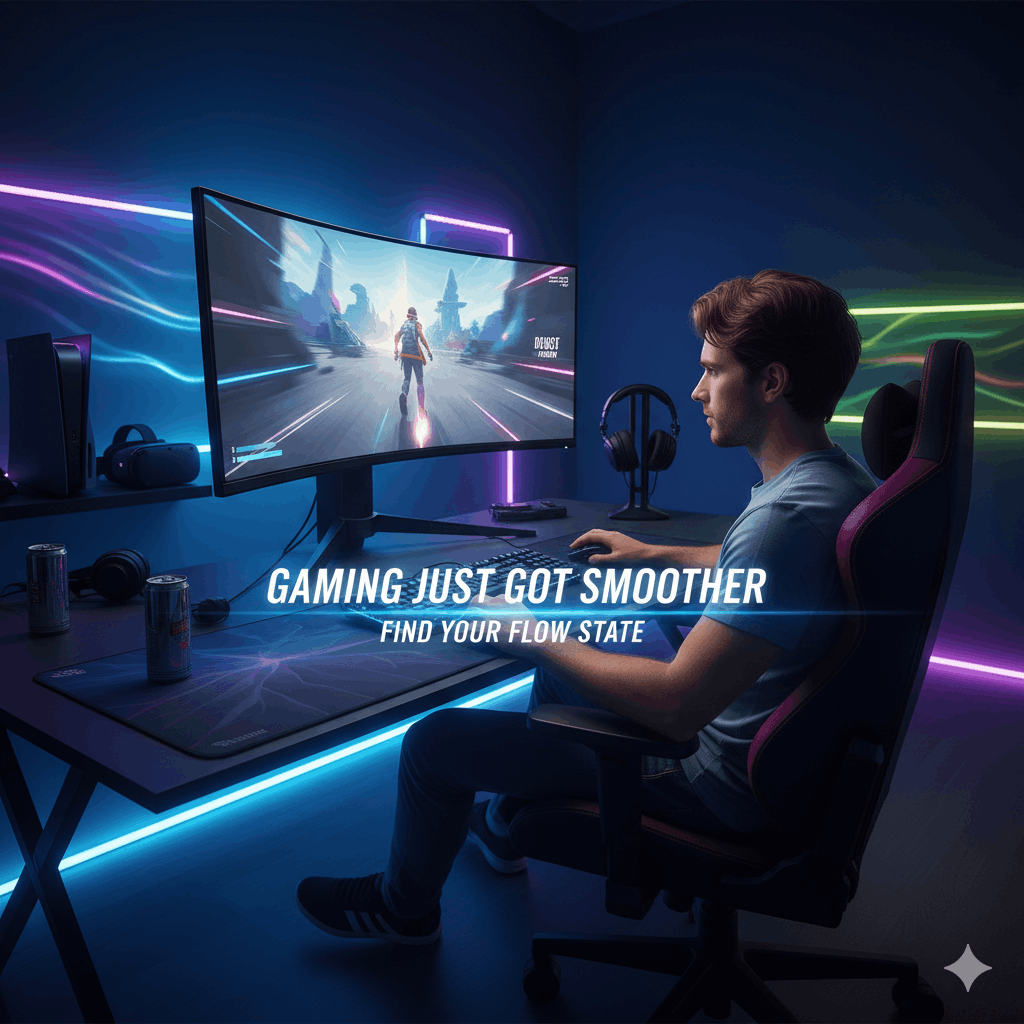
The phrase gaming just got smoother find your flow state is more than a catchy line. It’s a promise you can build with two ingredients:
- smoothness you can feel (stable frames, clean input timing, clear visuals)
- a routine that keeps your focus from drifting (warmup, resets, posture, attention habits)
You do not need perfect gear. You do not need a miracle setting. You need fewer friction points, and you need repeatability.
What flow state looks like for gamers
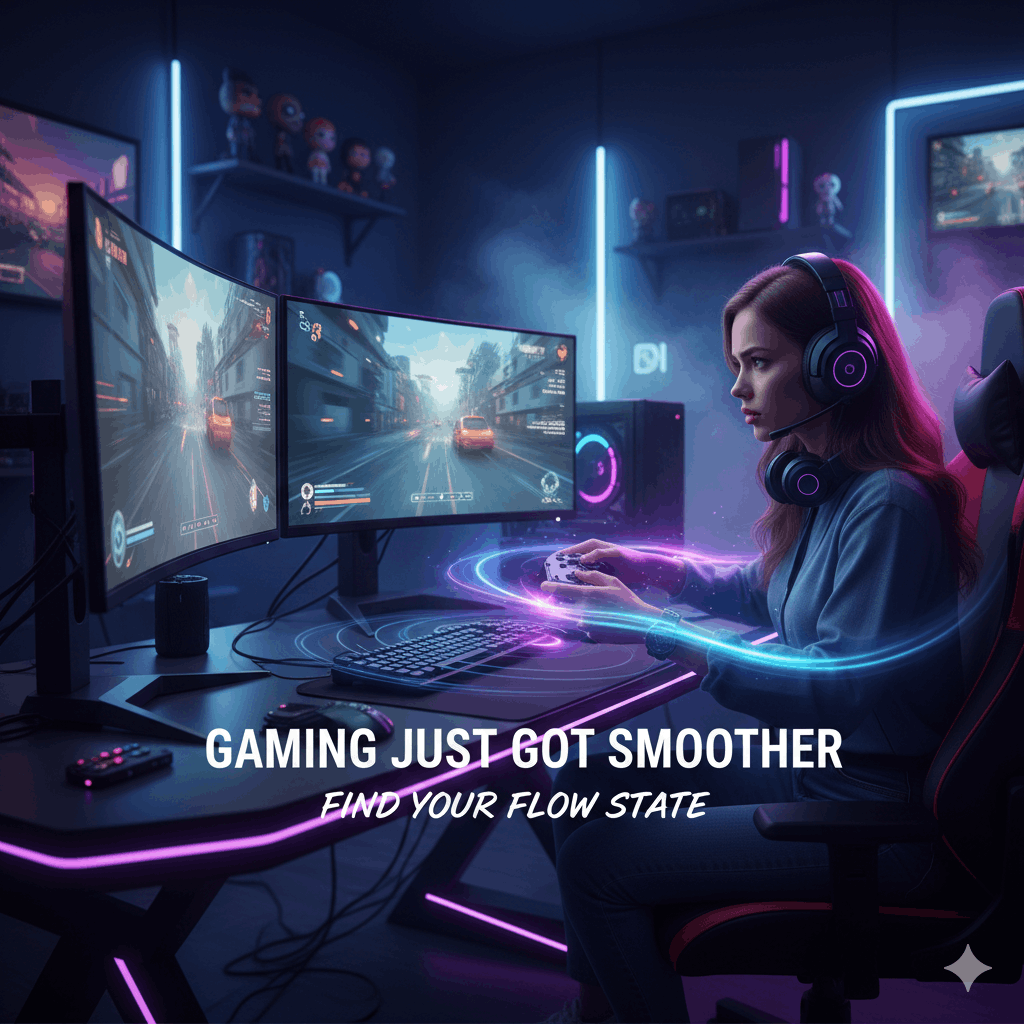
Flow state is the “in the zone” feeling that many players describe after a great session. It’s not magic. It’s a state where attention narrows, distractions fade, and the next decision feels obvious. You still make mistakes. You just recover faster and keep momentum.
For PC players, flow can show up in different forms:
- In shooters, it feels like smooth tracking, quick target reads, and steady reaction time.
- In strategy games, it feels like clear priorities, quick scanning, and fewer misclicks.
- In single player games, it feels like full immersion with less mental chatter.
A useful truth: flow is fragile. Small disruptions can snap it, even when your skill is the same.
Why “smooth” matters more than “high” for many players
Many guides chase a high FPS gaming experience like it’s the only goal. High FPS helps, yet peak FPS alone can still feel bad. The real difference is often stable frame rate gaming.
A stable experience means:
- fewer frame time spikes
- fewer sudden camera judders
- fewer moments where input feels delayed
- fewer visual distractions that force your brain to “recalculate”
That’s why “gaming just got smoother find your flow state” works as a framing. Smoothness lowers mental workload. Lower mental workload makes focus easier.
The three flow breakers that ruin sessions
Most “bad nights” come from a mix of these three categories.
Technical friction
This includes reduce stutter in games problems, screen tearing, uneven frame pacing, and input delay. Even a small hitch can break your rhythm.
Mental friction
This includes overthinking, frustration loops, and the slow build toward tilt. If you’ve searched gaming flow state tips, you’ve probably noticed the same pattern: the mind can sabotage a session as quickly as the GPU can.
Physical friction
This includes tension, poor posture, dry eyes, and fatigue. These problems sneak in quietly, then ruin accuracy and patience later.
The fix is not one big change. It’s a series of small changes that remove friction across all three layers.
Best settings for smooth gaming without turning it into a science project
Let’s handle the PC side first. This section gives you best settings for smooth gaming that work across many titles.
Stable frames first, then visuals
Start by picking a realistic target. If your PC can hold 120 FPS most of the time, aim for stability near that level. If it can hold 90 consistently, aim for that. For many players, “stable” beats “sometimes higher.”
This is the core of gaming without frame drops. Your goal is fewer sudden dips, not a flashy number.
Reduce stutter in games with a clean baseline
If your game stutters, start with a short baseline test:
- reboot your PC
- close background apps for gaming
- disable extra overlays for one test session
- run a repeatable route (same map, same mode, same area)
If stutter disappears during the baseline test, something outside the game caused it. If it stays, the game or drivers are likely involved.
Stutter can come from shader rebuilds after updates. It can come from a storage bottleneck. It can come from heat. The baseline test tells you which direction to go.
Eliminate screen tearing with the right sync plan
Screen tearing breaks immersion fast. Eliminate screen tearing by pairing your refresh behavior with your frame behavior.
Many players search vsync vs gsync for smooth gameplay because they want the simplest answer. Here’s the practical version:
- VSync can remove tearing, yet it can raise input delay in some cases.
- G-SYNC (or similar variable refresh tech) can reduce tearing and keep motion smoother when FPS fluctuates.
- Frame caps can help both, since they reduce sudden spikes that cause uneven pacing.
A good “feel-first” approach:
- If you have variable refresh, try it with a sensible frame cap.
- If you do not, try VSync in-game or in the driver, then test input feel.
Your goal is clean motion that still feels responsive.
Best graphics settings for performance with less visual clutter
This is where best graphics settings for performance matters, even for focus. Too many visual effects can distract your eyes and make targets harder to read.
Common settings that often cost frames and add noise:
- heavy shadow quality
- volumetric fog effects
- extreme reflections
- camera shake, film grain, motion blur
Common settings that often keep clarity:
- sharp textures if VRAM allows
- anisotropic filtering in many games
- a moderate AA setting if jagged edges distract you
A simple rule: remove effects that steal attention. Keep detail that improves readability.
Competitive gaming performance tweaks that improve “feel”
Competitive gaming performance tweaks are not just about frames. They’re about consistency:
- match your refresh rate to your real FPS range
- use one reliable sensitivity and keep it
- avoid changing key settings mid-tilt
- avoid stacking multiple capture tools
When your setup is predictable, your brain uses fewer resources on correction.
Reduce input lag gaming: the “flow killer” most people underestimate
Input delay is a silent problem. Your FPS counter can look fine, yet the game feels “sticky.” Reduce input lag gaming by fixing the most common causes.
Low lag input starts with stable frame pacing
When frame times swing, input timing can feel inconsistent. Many players chase higher frames, then wonder why the mouse feels odd. Stability often fixes the feeling.
Try a frame cap that keeps frames steady. Pair it with a tearing plan (sync or variable refresh). Then test again.
Mouse settings that keep aim consistent
Gaming mouse settings for precision is one of the easiest wins. The goal is not perfect numbers. The goal is repeatability.
Focus on:
- one DPI setting you keep for weeks
- one in-game sensitivity you keep for weeks
- a stable polling rate that your system handles without spikes
If you play shooters, best DPI settings for FPS games usually land in a range that allows control without tiny wrist tremors. The “best” setting is the one you can repeat under pressure.
Controller input delay and sensitivity
Controllers can feel great on PC, then suddenly feel delayed if the connection is unstable. Reduce controller input delay with a simple approach:
- use a reliable cable for testing
- keep wireless receivers close and unobstructed
- lower interference from other wireless devices nearby
- set dead zones so movement begins when you expect
For competitive play, controller sensitivity should be steady across weeks. Constant changes slow improvement.
Display choices that support flow: refresh, response, and clarity
Some people chase gear. Others want clarity. Both can be valid. This section explains why certain display choices support flow more than others.
High refresh rate gaming benefits in real play
High refresh rate gaming benefits show up in motion clarity and input feel. It can help tracking, flicking, and quick reads in shooters. It can help camera movement feel calmer.
The win grows when your PC can feed the frames consistently. A high refresh monitor with wildly fluctuating FPS can still feel messy.
144hz vs 240hz gaming: what changes, what doesn’t
144hz vs 240hz gaming is a popular debate. The jump from 60 to 144 is huge for most players. The jump from 144 to 240 can help, yet it’s less dramatic and depends on game type and skill.
Ask yourself:
- Do you mainly play esports titles?
- Can your PC hold high frames consistently in those titles?
- Do you notice motion clarity differences easily?
If the answer is yes, 240 can be worthwhile. If not, a great 144/165 setup can still feel excellent.
Monitor response time explained without marketing noise
Monitor response time explained simply: it affects ghosting and motion smear. Marketing numbers can be confusing. What matters is how motion looks in your real games.
A practical test:
- pan the camera in a game you know well
- watch edges on high-contrast objects
- adjust monitor overdrive settings if needed
Your goal is clean motion without distracting trails.
Improve PC gaming performance the calm way: system habits that matter
A lot of guides push extreme tweaks. Most players just need stable habits.
Close background apps for gaming and protect frame pacing
Browsers, launchers, sync tools, and chat apps can spike CPU usage and disk activity. Close background apps for gaming during ranked sessions. If you need voice chat, keep just one communication tool running.
This is a core part of smooth gameplay tuning because background spikes often look like “game problems.”
Windows gaming performance tweaks that don’t break your system
You can make small improvements without risky hacks:
- choose a steady power mode for gaming sessions
- disable heavy background capture features you don’t use
- reduce startup clutter so the PC launches clean
- keep drivers current when needed, not constantly
This overlaps with game mode settings PC topics. Game Mode can help in some cases, yet results vary by system and title. Test it on your own setup with a repeatable benchmark route.
Optimize gaming PC startup with a clean routine
A slow, cluttered startup often means more background tasks fighting for resources.
A simple approach:
- remove nonessential startup apps
- keep your tray clean
- restart your PC before long sessions
- avoid big downloads during ranked play
This supports stable frame rate gaming and reduces random hitching.
Cooling and storage: the hidden causes of “bad nights”
Many players blame settings, then later discover their PC is throttling or their drive is the real bottleneck.
Cooling system for stable gaming
Heat can cause clock drops that feel like stutter. Your FPS counter may not even tell the full story. Cooling system for stable gaming starts with basics:
- clean dust filters
- keep airflow paths clear
- check fan curves so cooling ramps earlier
- avoid blocking intake fans
If your performance drops after 15–30 minutes, heat is a strong suspect.
Best SSD for gaming load times and fewer hitches
Best SSD for gaming load times matters for open-world streaming and large patches. Reduce game loading time by installing large titles on fast storage and keeping enough free space for updates and caches.
Storage can affect more than loading screens. In some games, slow streaming can create hitching during movement.
Network smoothness: reduce lag in online games and keep rhythm
Flow breaks quickly in online matches when ping spikes or packet loss hits. Reduce lag in online games with consistency habits.
Network tuning that improves stability
Network settings should aim for stable behavior, not only low numbers. Your goal is fewer sudden spikes mid-fight.
Good habits:
- prioritize wired vs wireless gaming performance for competitive play
- pause downloads and updates during matches
- avoid streaming high-resolution video on the same connection during ranked sessions
- reboot router if performance becomes unstable over time
Best router settings for gaming: what to check
Many people ask for best router settings for gaming. The best answer depends on the router, yet these general checks help:
- keep firmware updated
- place the router away from interference sources
- use a clean Wi-Fi channel if you must use Wi-Fi
- avoid crowded network traffic during matches
Gaming ping reduction tips that help most households
Gaming ping reduction tips often come down to habits:
- use ethernet
- avoid VPN routes that add delay
- keep background uploads off during play
- choose the closest server region when possible
If you must use Wi-Fi, place the PC closer to the router and reduce interference.
Pro gamer setup for smooth play: what matters, what’s optional
“Pro setup” is often sold as gear lists. The real advantage is a stable environment.
Pro gamer setup for smooth play usually includes:
- a monitor that matches the player’s frame targets
- reliable input devices
- a consistent sensitivity
- a chair and desk height that reduce tension
- a distraction-light environment
The theme is repeatability. Flow grows when your setup feels the same each time.
Deep focus gaming routine: the part most people skip
Settings can remove friction. Routine keeps friction from returning.
This section is the heart of gaming just got smoother find your flow state.
Pre-game warmup for gamers (10–15 minutes)
Pre-game warmup for gamers does not need to be long. It needs to be consistent.
A simple structure:
- two minutes to clear distractions (tabs, notifications, clutter)
- five minutes of aim training for smooth gameplay or a practice range route
- two minutes of movement and posture reset
- one minute to set a single focus goal for the session
That single goal matters. It could be crosshair placement, recoil control, calmer comms, or better map checks. One goal keeps your attention from scattering.
Training brain for gaming focus without overthinking
Training brain for gaming focus is less about hacks and more about attention control:
- remove one major distraction
- keep the warmup the same
- start sessions at similar times when possible
- stop changing settings mid-session
This forms a cue: “When I do this routine, I enter play mode.”
Hand-eye coordination exercises gaming players can actually stick with
Hand-eye coordination exercises gaming can be simple:
- short aim drills
- tracking practice
- micro-flick drills
- movement drills
Short beats long. Consistency beats intensity. Your goal is steady reaction patterns, not exhaustion.
Improve reaction time in games without chasing gimmicks
Improve reaction time in games comes from clean inputs, calm attention, and repetition. Reaction time suffers when:
- you are tense
- you are fatigued
- your eyes are overloaded by effects
- your input timing is inconsistent
You can raise reaction quality by lowering friction:
- smoother frames
- fewer visual distractions
- stable sensitivity
- short warmups
How to avoid tilt in competitive games and protect flow
Tilt is the fastest flow destroyer. It turns one mistake into ten.
Recognize tilt early
Tilt often shows up as:
- rushing fights
- overpeeking
- blaming everything outside your control
- rapid setting changes searching for a quick fix
The earlier you notice it, the easier it is to stop.
A simple reset between matches
You do not need a long meditation routine. You need a short reset:
- stand up
- loosen shoulders and grip
- drink water
- take two slow breaths
- rest your eyes for a few seconds
That reset helps you return to gaming focus techniques that keep decisions clean.
Competitive mindset for gamers: focus on process
Competitive mindset for gamers works best when you measure your process:
- Did you take smart fights?
- Did you keep crosshair placement?
- Did you communicate clearly?
- Did you keep emotions from driving pushes?
Rank will follow process over time. Process protects flow.
How to maintain flow during long matches
Long sessions break flow through fatigue and drift. This section helps prevent the slow decline.
Avoid fatigue during gaming sessions
Fatigue comes from:
- tense posture
- long unbroken sessions
- dry eyes
- lack of hydration
- cognitive overload
Simple fixes:
- keep the room comfortable
- set small breaks every hour
- keep posture upright with relaxed shoulders
- avoid heavy visual settings that strain your eyes
Gaming posture for long sessions
Gaming posture for long sessions is about comfort and control:
- feet stable
- elbows supported
- shoulders relaxed
- wrists not bent awkwardly
- screen at a comfortable height
Small posture fixes can noticeably improve aim stability and reduce frustration.
Distraction-free gaming environment
Distraction-free gaming environment is not only about noise. It includes:
- phone out of reach
- fewer popups
- fewer browser tabs open
- consistent lighting
If you play at night, blue light settings for gamers and a comfortable night mode can reduce eye strain for some people. Test what feels best for you.
Audio settings for competitive advantage
Audio is an underused part of flow. Clean audio helps your brain predict what happens next.
Best headset for positional audio
Best headset for positional audio is the one that helps you locate steps, reloads, and ability cues without harshness. Comfort matters too, since discomfort breaks focus.
Audio settings that reduce noise
Many games allow:
- lowering music during ranked play
- lowering effects that mask footsteps
- reducing voice chat volume spikes
Aim for clarity. Clarity supports calm decisions.
Smooth streaming and gaming setup without ruining your session
Many players want clips or streams. The problem is that capture tools can create stutter, input delay, and frame dips.
Smooth streaming and gaming setup starts with one rule: keep capture simple.
- choose one recording tool
- test your scene settings
- record to fast storage if possible
- avoid high CPU load settings that cause frame spikes
If your system struggles, reduce capture resolution and keep gameplay stable.
Boost FPS without upgrading hardware: realistic wins
Boost FPS without upgrading hardware is possible in many cases. The wins often come from:
- reducing heavy graphics settings that cost frames
- using a consistent frame cap to reduce spikes
- removing background tasks during play
- keeping storage clean and fast
- keeping cooling stable
This is often the fastest route to a smoother feel.
Best performance mode in games: use it with intention
Many games offer a “performance mode” or presets. Best performance mode in games can be useful when you need a fast baseline.
Use it as a starting point:
- apply the preset
- test one match or route
- adjust only what you actually notice (clarity, tearing, stutter)
That keeps you from spiraling into endless settings changes.
Gaming performance tracking tools that don’t steal focus
Tracking can help, yet too much tracking breaks flow. Gaming performance tracking tools are most useful when they run quietly and you check them after a session, not during every round.
Track trends like:
- average FPS in a repeatable area
- frame pacing issues during heavy fights
- temperature behavior over time
Use the data to make one change at a time. Then stop.
Advanced gaming performance guide mindset: build your personal “flow system”
This final section ties it all together. Your goal is a personal system that triggers flow more often.
Make a “do not touch” list
Choose a few settings you will not change mid-session:
- sensitivity
- DPI
- refresh rate
- sync plan
- core graphics preset
When you keep those stable, you remove a major source of distraction.
Build a short repeatable routine
Keep it simple:
- warmup
- one goal
- one reset
- one stop rule
That structure helps improve gaming consistency even on bad nights.
Keep your setup consistent
A calm setup supports a calm mind:
- similar lighting
- similar posture
- similar audio
- similar start time when possible
That’s the quiet power behind gaming just got smoother find your flow state.
Conclusion
Flow is not reserved for rare nights. You can build it. Smoothness reduces friction. Routine protects focus. When you treat both as part of your game, you get more sessions where aim feels clean, reaction time stays sharp, and mistakes don’t spiral.
Start with one technical change that improves stability, like reducing stutter in games or setting up a better tearing plan. Pair it with one routine change, like a short pre-game warmup for gamers. Give it a week. That’s enough time to notice patterns and build confidence in your own system.
FAQs
What does “gaming just got smoother find your flow state” mean?
It describes a practical goal: make gameplay feel smoother through settings and system habits, then use a routine that helps you enter flow more often. Smoothness supports focus, and focus supports better play.
How do I enter flow state during gaming on PC?
Start by removing friction. Use stable frame rate gaming settings, reduce stutter in games, and keep input consistent. Then use a short deep focus gaming routine: warmup, one goal, and short resets between matches.
Why does high FPS still feel bad sometimes?
High FPS gaming experience can still feel rough if frame pacing is unstable, tearing is present, or input timing is inconsistent. Stability often matters more than peak numbers.
What are the best settings for smooth gaming if I play ranked?
Prioritize stable frames, a clean tearing plan (vsync vs gsync for smooth gameplay choices), and low input delay habits. Keep sensitivity and DPI steady. Avoid changing settings mid-tilt.
How can I reduce input lag gaming without buying new gear?
Close background apps for gaming, reduce overlay load, cap frames if your game swings, set your display refresh correctly, and keep mouse/controller connections stable.
What helps me avoid tilt in competitive games?
Recognize early signs, use a short reset between matches, and focus on process goals. Tilt often comes from chasing outcomes. Process keeps you grounded.
Does a 240Hz monitor guarantee smoother play than 144Hz?
144hz vs 240hz gaming differences depend on your game type, your ability to hold high frames, and your sensitivity to motion clarity. 240Hz can help in esports titles, yet a strong 144/165 setup can still feel excellent.
What should my pre-game warmup for gamers include?
Keep it short and repeatable: two minutes to clear distractions, five minutes of aim training for smooth gameplay, a posture reset, then one focus goal for the session.
How do I reduce lag in online games at home?
Use wired vs wireless gaming performance in favor of ethernet for ranked play, pause downloads, reduce network congestion, and keep router placement clean. Stable behavior matters more than chasing tiny improvements.
What’s the simplest way to boost FPS without upgrading hardware?
Use best graphics settings for performance that remove heavy effects, keep frames stable with a cap if needed, close background tasks, keep storage fast, and keep cooling steady to avoid throttling.